
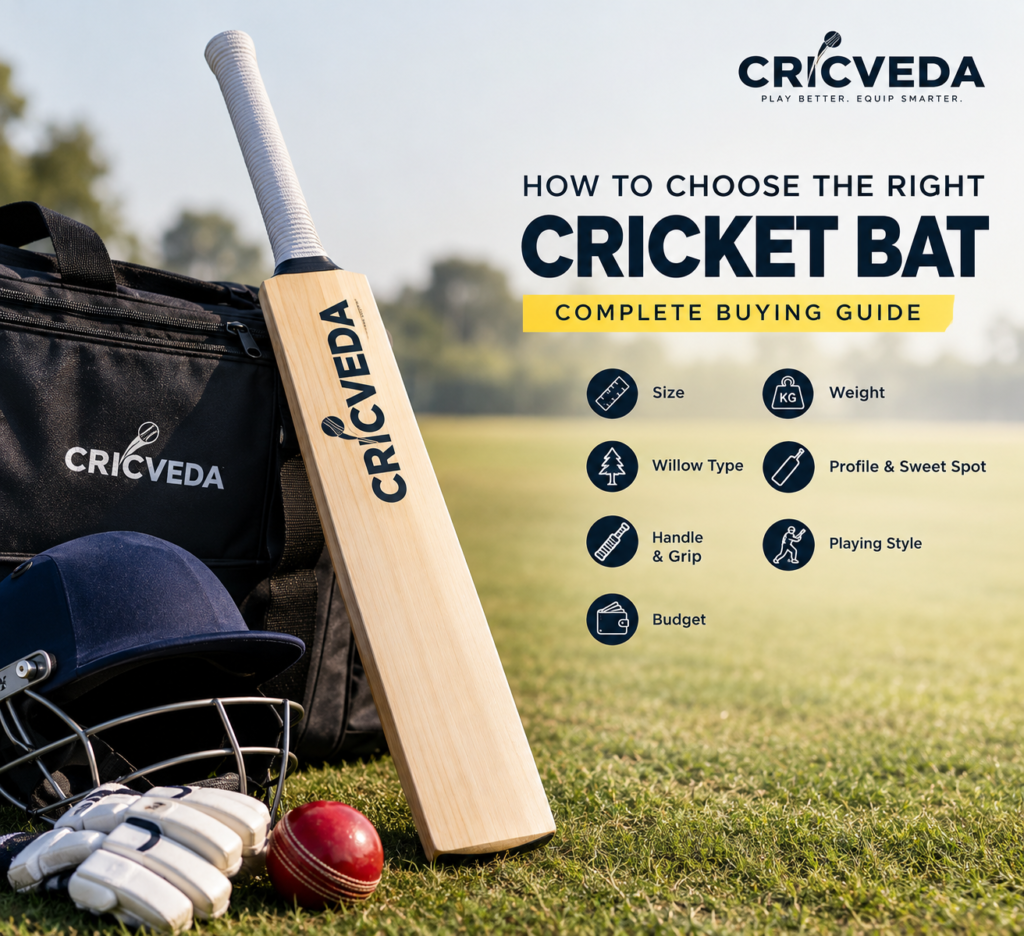
How to Choose the Right Cricket Bat: Complete Buying Guide
Choosing the right cricket bat can make a significant difference to your comfort, confidence, and performance on the cricket field. With so many options available—from English willow and Kashmir willow to different sizes, weights, profiles, and blade shapes—it can be difficult to know which bat is right for you. Whether you are a beginner, club-level player, or an experienced cricketer, this complete cricket bat buying guide will help you understand the most important factors to consider before purchasing your next bat. Why Choosing the Right Cricket Bat Matters A cricket bat is not simply about looks or brand name. The right bat should match your height, age, playing style, strength, skill level, and budget. A bat that is too heavy can make stroke play difficult and may affect your timing. On the other hand, a bat that is too light may not provide the balance and power you are looking for. Before buying a cricket bat, consider: Understanding these factors will make it much easier to find a bat that feels comfortable and suits your game. 1. Choose the Correct Cricket Bat Size One of the first things to consider when buying a cricket bat is its size. Cricket bats are available in different sizes, including Size 1 through Size 6, Harrow, and Full Size (Short Handle). The appropriate size generally depends on the player’s height and age. General Cricket Bat Size Guide Player Height Recommended Bat Size 4’0″ – 4’3″ Size 1 4’3″ – 4’6″ Size 2 4’6″ – 4’9″ Size 3 4’9″ – 4’11” Size 4 4’11” – 5’2″ Size 5 5’2″ – 5’4″ Size 6 5’4″ – 5’7″ Harrow 5’7″+ Full Size These measurements are general guidelines. Players with different physical builds or preferences may find another size more comfortable. Why Bat Size Is Important A properly sized cricket bat allows you to maintain better control and play shots naturally. A bat that is too long or too heavy can make it harder to control the bat during fast bowling. For young players especially, selecting the correct junior cricket bat size is important for developing proper technique. 2. Choose Between English Willow and Kashmir Willow One of the biggest decisions when buying a cricket bat is choosing the type of willow. The two most common types are English Willow and Kashmir Willow. English Willow Cricket Bats English Willow is traditionally considered a premium material for cricket bats. It is generally lighter and is commonly preferred by competitive and advanced players. English Willow bats are available in different grades, and the grade can influence appearance, performance, and price. They are particularly popular among players looking for: Kashmir Willow Cricket Bats Kashmir Willow is commonly used for more affordable cricket bats. It is a popular option for beginners, recreational players, school players, and players who want a good cricket bat at a lower price. Kashmir Willow bats can be suitable for: English Willow vs Kashmir Willow The right choice depends on your playing level and budget. You do not necessarily need the most expensive English Willow bat if you are a beginner. If you are starting your cricket journey, a good-quality Kashmir Willow bat can be a practical choice. More experienced players may prefer an English Willow bat based on their playing requirements. 3. Select the Right Cricket Bat Weight Cricket bat weight is another important factor. A heavier bat can provide a strong feel and may suit players who have the strength and technique to control it. A lighter bat can make it easier to move the bat quickly and can be beneficial for players who rely heavily on timing and quick stroke play. Common cricket bat weights can vary depending on size and construction, but adult bats often fall roughly within the 2.5 lb to 3.0 lb range. However, the number printed on the bat is not the only thing that matters. What Is Bat Pickup? Bat pickup refers to how heavy or light a bat feels when you hold and move it. Two bats with the same actual weight can feel completely different because of their weight distribution and balance. Therefore, when choosing a cricket bat, don’t focus only on the number of pounds. Consider how naturally you can lift, control, and swing the bat. How to Choose the Right Bat Weight Choose a bat that you can comfortably control while playing different shots. You should be able to: A lighter bat is not automatically better, and a heavier bat is not automatically more powerful. The best cricket bat weight is the one you can control effectively. 4. Understand the Cricket Bat Profile The bat profile describes the shape and distribution of the wood across the blade. Different bats have different profiles depending on where the manufacturer places the bulk of the wood. Some bats have a lower sweet spot, while others have a mid or higher sweet spot. Low Sweet Spot A lower sweet spot can be useful for players who regularly play on slower or lower-bouncing pitches. Mid Sweet Spot A mid sweet spot is a versatile option and can work well for players who play on a variety of pitches. High Sweet Spot A higher sweet spot can be preferred by players who play on faster, bouncier pitches or who prefer a particular style of stroke play. There is no universally perfect profile. Your playing conditions and technique should influence your choice. 5. Check the Cricket Bat Sweet Spot The sweet spot of a cricket bat is the area of the blade where the bat generally provides its best combination of response and feel when the ball is struck. The position of the sweet spot can affect how the bat feels during different types of shots. When buying a bat, consider whether you naturally strike the ball closer to the lower, middle, or upper part of the blade. This can help you select a profile that complements your technique. 6. Pay Attention to the Cricket Bat Handle The handle is another important